

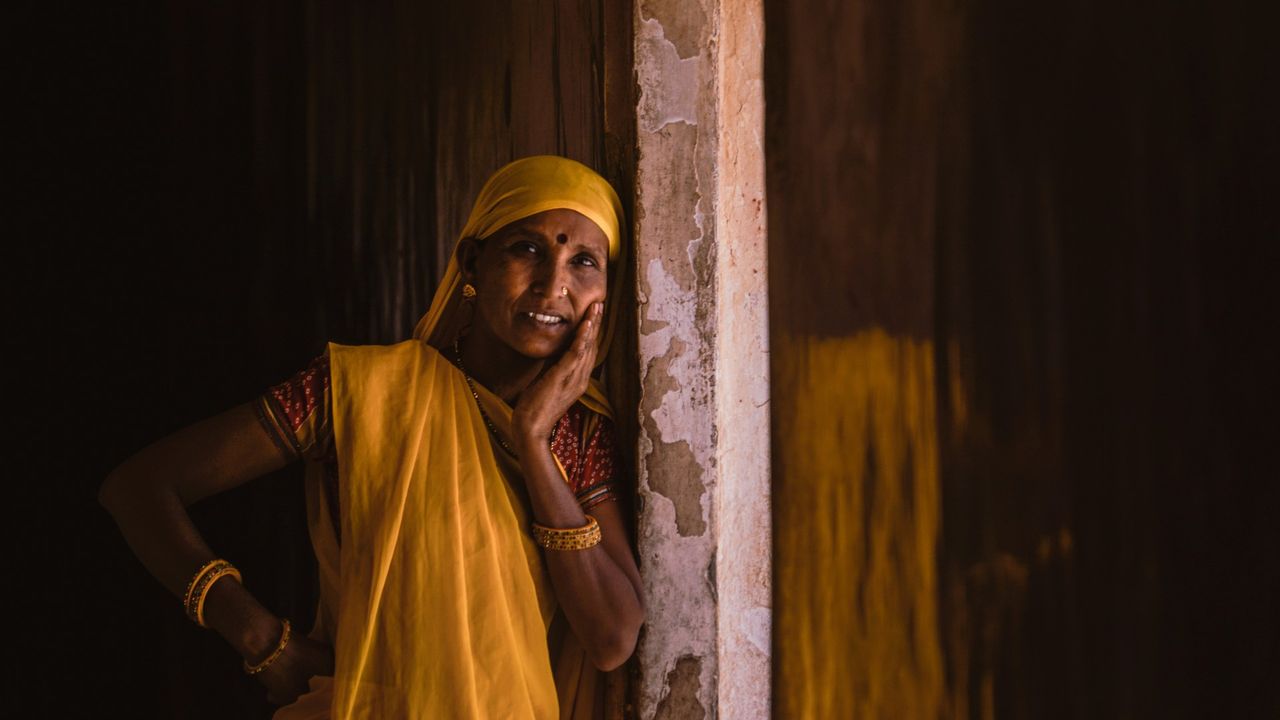
“Each time a woman stands up for herself, without knowing it possibly, without claiming it, she stands up for all women.”
There are silences that are chosen, and there are silences that are inherited.
The silence of a girl who folds away her dreams because someone has told her they are too ambitious. The silence of a woman who whispers “I am fine” while carrying the weight of an entire household. The silence of a mother who has learnt to place everyone else first, until she can no longer remember what it feels like to choose herself.
These silences rarely make a sound. Yet, across generations, they have shaped the boundaries of women’s lives, teaching them how much of themselves they must surrender to be accepted. Perhaps the deepest tragedy of gender injustice is not merely that women have been denied freedom, but that so many have been taught to regard the denial as natural.
A girl is welcomed into the world, yet almost immediately begins negotiating the terms of her existence. Be good, but not too bold. Be educated, but remember your duties. Be independent, but never so independent that someone feels unnecessary. Somewhere between these instructions, a girl begins to mistake obedience for goodness and self-erasure for love.
How much of a woman’s life must be surrendered before society considers her worthy of respect?
The Injustice We Have Learnt to Call Tradition
Gender injustice does not always arrive with a raised fist. Sometimes, it sits quietly at the dinner table, speaks through familiar advice, and hides behind traditions nobody dares to question.
It is there when a brother’s ambitions are celebrated while his sister’s dreams are considered impractical. It is there when a woman’s exhaustion is praised as devotion, but her refusal to endure is condemned as selfishness. We celebrate women’s strength, yet too often use that strength as an excuse to leave them unsupported.
There is something profoundly unjust about a world that wounds women and then applauds them for learning to live with the pain.
Tradition deserves respect, but not unquestioning obedience when it diminishes another person’s dignity. The fact that an injustice has survived for generations does not make it a virtue; sometimes, it simply means that generations have been taught not to question it.
Gender justice begins with the courage to see what familiarity has made invisible.
Dignity Is Not a Gift to Be Granted
The theme of the current quadrennium of the YWCA of India, “Together for Justice: Dignity through Equity,” invites us to look beyond the appearance of equality and confront the barriers that prevent women from living with dignity.
Equality may open a door, but equity asks whether everyone has a fair chance of reaching it.
What does an open classroom mean to a girl who must abandon her education to care for her siblings? What does equal employment mean to a woman whose labour is undervalued? What does legal protection mean to a survivor who lacks the support to seek justice?
A promise, however beautifully written, remains incomplete until it becomes a lived reality.
For one woman, equity may begin with education; for another, with a livelihood, legal assistance, or a safe space in which her voice is heard. These are not acts of charity. They are the foundations of a just society.
Dignity is not a reward for obedience or a privilege reserved for women who fulfil society’s expectations. It belongs to every woman by virtue of her humanity. And yet, how often must a woman prove her worth before she is permitted to live as though she already possesses it?
The Revolution That Begins in an Ordinary Room
We often imagine revolutions as grand historical events. But some of the most enduring revolutions begin quietly, in rooms where nobody is keeping a record.
A woman learns a skill and discovers that her hands can create more than something beautiful; they can create a livelihood. Another learns about her rights and finds the courage to question what she once accepted without protest. A young girl speaks her mind in a room where she was previously expected to remain silent.
To the world, these moments may appear small. To the women experiencing them, they may represent the beginning of an entirely different life.
The first revolution is often the moment a woman begins to see herself differently.
A skill can become an income, but it can also become a voice. Knowledge can become protection, but it can also become the courage to imagine a future beyond inherited limitations. A gathering of women can become a place where private struggles are recognised as shared experiences, and isolation gives way to solidarity.
This is the quiet power of collective empowerment: one woman’s courage becomes another’s possibility.
Yet empowerment must mean more than teaching women to become stronger while leaving the structures that diminish them untouched. Its purpose is not to teach women how to endure injustice more gracefully, but to help create a world in which they no longer have to.
The Homes We Must Reimagine
Gender justice cannot remain the responsibility of women alone. We cannot expect daughters to inherit freedom if the homes in which they grow up continue to reproduce the restrictions imposed upon their mothers.
Our sons must learn that care is not exclusively a woman’s responsibility, that sharing domestic work is not a favour, and that respect does not diminish their masculinity. Our daughters must learn that kindness need not require silence, and that love need not demand self-abandonment.
The family can be the first institution to teach inequality, but it can also be the first place where justice takes root.
Imagine a household where a girl’s ambitions are nurtured alongside her brother’s, rather than negotiated against them. Imagine a world where women can make decisions without fear and men understand partnership as a responsibility, not a concession.
Gender justice is not a battle against men. It is a struggle against the belief that one person’s humanity must be diminished for another’s to be elevated. It calls us to replace domination with partnership, entitlement with responsibility, and inherited prejudice with conscious choice.
Together, We Must Change the Story
Maya Angelou’s words remind us that when one woman stands up for herself, her courage reaches beyond the boundaries of her own life. Her act becomes a possibility witnessed by another woman and a challenge to a society accustomed to her silence.
But solidarity must be more than applause for women who find the courage to speak. It must mean listening when their voices are inconvenient, sharing power when equality demands it, and transforming institutions that continue to exclude them.
Women do not all encounter the same barriers. Poverty, disability, age, and unequal access to resources can deepen the injustices they face. A genuine commitment to equity must recognise these differences and respond to women’s actual circumstances.
Our responsibility is to build communities in which women are not merely beneficiaries of development, but participants in shaping it; not simply recipients of protection, but people whose rights are recognised and upheld.
We may not witness the end of every injustice in our lifetime. But we can refuse to pass it on unquestioned. We can challenge the sentence that diminishes a girl, support the woman whose choices are being denied, and build institutions that treat dignity as a responsibility rather than an aspiration.
Let Her Rise Without Having to Break
Let us return to the girl who learnt to make herself smaller.
Let us imagine a world in which she can pursue her ambitions without guilt, speak without intimidation, and love without losing herself. A world in which her worth is not measured by the burdens she carries or the dreams she abandons for someone else’s sake.
Perhaps justice begins when we stop asking women how much more they can endure and start asking why they must endure so much at all.
Perhaps dignity begins when a woman no longer has to prove her worth through sacrifice. And perhaps equity becomes real when the girl who once learnt to bend discovers that she is allowed to stand tall, not because someone has finally given her permission, but because nobody ever had the right to take that freedom away.
Let this be more than a theme. Let it be a promise to every girl still learning to silence herself, every woman still fighting to be heard, and every generation that deserves a fairer inheritance than silence.
For the measure of a just world will never be how gracefully its women learn to endure injustice.
It will be how courageously that world learns to end it.