

We are currently witnessing the largest surge of urban growth in history; with the huge influx of people migrating from different places in search of better prospects and opportunities has resulted in a significant change in the social, economic, and environmental surroundings of these regions. Urbanisation is not bad per se. Though the benefits of living in developed cities are quite clear, it is important to recognise that this rapid, often unplanned urbanisation presents new and substantial challenges, ranging from governance, livelihood and citizenship to infrastructure, housing, and environment. To focus more on the environmental consequences like freshwater scarcity, deforestation, change in land use, loss of biodiversity, increase in waste generation and pollution, etc. have been observed globally. One of the most important unseen consequences is municipal waste management (MSW), managing this exponential waste has become an insurmountable task.
According to CPCB’s annual report, in the year 2020–21 the total quantity of Solid waste generated in India is 160,038.9 tonnes per day (TPD) of which 152,749.5 TPD is collected.
Out of this, 79,956.3 TPD is treated and 29,427.2 TPD is landfilled while a staggering 50,655.4 TPD remains un-accounted.1
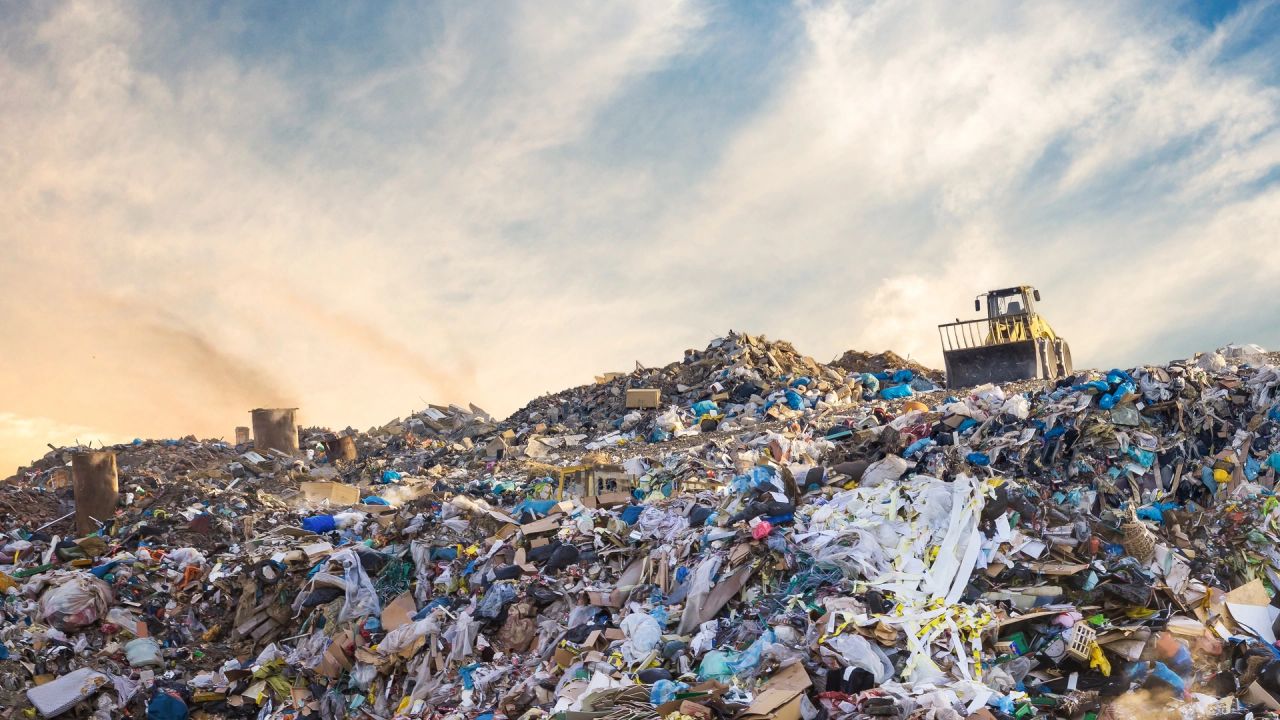
On paper, it might look like our waste is being managed properly but in reality, the situation is quite the opposite. There is a lack of data about what happens to the collected waste, what gets recycled, and what is recovered. In Delhi alone, there are 3 landfills which perfectly explains our waste management infrastructure. To add to the problem recently there were numerous fires in these landfills. Landfills have a mixture of waste types (wet, dry, bio-medical, and electronics) due to a lack of waste management infrastructure, awareness, and source segregation. Landfills are the easiest way to get rid of your waste but landfills are ticking time bombs, this landfill emits different gases. Methane and carbon dioxide make up 90 to 98% of landfill gas, both of which are greenhouse gases and have an influence on climate change. Methane is flammable and concentrations have sometimes exceeded explosive levels indoors. The remaining 2 to 10% includes nitrogen, oxygen, ammonia, sulphides, hydrogen, and various other gases. There are numerous ways in which mismanagement of waste leads to climate change and ecological imbalance. It’s important we understand waste management and also those who are involved in it.
The official waste management system in many cities could not be managed without their innumerable waste pickers, scrap collectors, traders, and recyclers. Although not officially approved, recognized, and acknowledged, they often form the very basis of waste collection services, in many cases at no cost to local authorities, central governments, or residents. The prevalent caste system in Indian society is a determining factor in the solid waste management system. Waste picking, along with any work related to garbage or the handling of carcasses and human excreta is traditionally bound to the lowest caste and class groups. From the very beginning, women from these castes have been the only ones prepared to soil their hands and they, therefore, make up the majority of waste pickers. The men, on the other hand, are active in itinerant buying, with access to capital, relatively better work conditions, and therefore marginally better status. Organically grown informal sector activities are highly adaptable, flexible, and able to respond quickly to demand-driven forces. According to a report by CSE, an itinerant waste dealer (raddiwala) and waste collectors (kabadiwalla) collectively recover nearly 1.2–2.4 million tonnes of newspapers, 2.4–4.3 million tonnes of cardboard and mixed paper, approximately 1.3 million tonnes of glass, more than 2.6 million tonnes of metal waste and 4–6.2 million tonnes of other recyclable materials each year.2 Thus, we can observe the vast experience and hold that the informal sector has on the waste management system. Though the wages earned don’t do justice to the amount of physical labour, harassment, health issues, and other complications. Informal waste collectors and recyclers unrelentingly come up with adaptive strategies to access waste and circumvent barriers while at the same time integrating new systems as they emerge. Handling waste is seen as something of low economic value, no dignity, and messy. Thus, we must build such an infrastructure that integrates the informal sector/workers into this waste management chain. Integrative and decentralized approaches offer advantages in economic, environmental, and social terms and are thus seen as being the most sustainable future alternative in many cities.
So, what are the possible ways in which we can integrate them into the system? Though it seems easy, any intervention in this matter needs to be understood and seen from the angle of the informal sector.
Involvement Of Waste Workers In Waste Management Systems
By making it legal and practically straightforward to involve informal waste workers in municipal waste management systems. Waste workers are often excluded from securing municipal contracts for solid waste management, either explicitly or implicitly by the complexity and rigidity of the procurement processes. National governmental bodies can formally recognize waste picking and related jobs as an occupation so that it is easier to document the number of people in the industry and their working conditions.
Identification Of Informal Workers And Legal Protection
Urban Local Bodies (ULBs) must identify rag pickers and kabadiwalas in their operational area, catalogue them and create their socio-economic profiles, containing the name, age, the gender they identify with, and the quantity of waste collected by them. This will help analyse the opportunities and obstacles in the solid waste management systems that are likely to be encountered by ULBs while integrating the informal sector. Providing waste pickers identification cards can legitimise them as service providers of solid waste recycling. Signing contracts with informal sector organisations make their work legal. Individual informal sector suppliers typically face harassment from public officers and town residents. Formalising informal service suppliers will help address a number of these issues. Other benefits could be by allocating working space and other facilities to the waste workers.
Technology And Tradition
Governments that want to be perceived as progressive and modern are increasingly favouring technocratic solutions. Such solutions involve high capital costs and are not necessarily as efficient at collecting, sorting or recycling waste. These technologies are often either Waste to Energy (WtE) plants or waste used as fuel in cement kilns or other industries. In Delhi, a few years back there were protests to shut down Waste to Energy plants as they were creating more pollution than solving the waste issue. A study conducted by the Shriram Institute for Industrial Research in 2017 says that between 55 percent and 60 percent of MSW in Delhi is biodegradable.3 Ideally, the waste for WtE plants should be clean and should not have traces of organic matter. It requires a lot of segregation and cleaning of waste to make the plant successful. Technologies used in European nations to tackle waste can’t be replicated in India, where the type of waste varies from region to region, and needs on-ground segregation and collection rather than the use of foreign technology used in regions where the population and waste types are different. Thus, replacing regulations that recognise waste as a renewable energy source with regulations that favour composting and the reuse and resale of resources could have beneficial effects on municipal budgets, the environment, and workers.
Training And Awareness Programmes
Despite the occupational and health hazards their job entails, waste workers hardly use any protective gear and are exposed to frequent injuries like cuts from glass pieces and metal, and stress injuries due to carrying heavy loads. To ensure a better health and safety regimen for waste workers, governmental bodies should allot funds to civil societies, and informal worker organisations/groups to carry out training for waste pickers on the importance of using protective equipment and following safe and ergonomic work practices. ULBs should plan and implement training and awareness programs to educate the municipal workforce, common citizens, educational institutions, commercial establishments, hotels and restaurants, and administrators of public places. The training programmes should aim at building capacities for achieving ideal source segregation of various components of MSW, including waste recyclables.
Producer Responsibility
Hold producers of waste responsible for recovery, recycling, and re-use after consumption. Policies that hold producers of waste responsible for what happens to it encourage waste minimisation and reduce the proportion of waste going to landfill. For waste workers, such policies can create opportunities to secure work from large private firms that produce substantial amounts of waste. National governments can complement such policies with financial incentives for the recycling industry and support establishing relationships and contracts between private firms and waste picker associations.
To conclude, integrating informal workers into the formal chain of waste management might sound easy but will require a lot of research and effort from both sides’ governmental bodies and waste workers. The possible ways to integrate will lead to not just livelihood opportunities at the waste worker level but also open avenues for other agencies and regulatory bodies. Though the nature of work is lucrative and has numerous players in between who would not want to become formalised as they would be restricted and follow guidelines after becoming formalised. However, with the correct approach, implementation, and monitoring, models such as (SWaCH, Pune)4 can be replicated with minimal involvement with the governmental bodies. The informal workers are well versed with the waste stream and require minimal hand holding. What is important is legal, occupational, and health protection.
Notes
-
Annual Report 2020–21 on Implementation of Solid Waste Management Rules, 2016 – Central Pollution Control Board. ↩︎
-
PM Modi launches campaign to make India garbage free – Down To Earth, citing the Centre for Science and Environment. ↩︎
-
How Delhi’s waste-to-energy plants are way off the mark – Down To Earth. ↩︎
-
SWaCH: India’s first wholly-owned cooperative of self-employed waste collectors and other urban poor, providing front-end waste management services to the citizens of Pune. ↩︎